

If you manage your own type 2 diabetes, you have probably read that cinnamon helps blood sugar and then bought whatever jar was cheapest at the grocery store. I did exactly that for years, reaching for the everyday cassia jar without thinking twice. It turns out there are two very different kinds of cinnamon under that same word, the jars are almost never clear about which one you are getting, and the type most of us grab by habit is the one with the caution attached. When I finally moved to the low coumarin Ceylon, the steady daily capsules from NutriFlair, the choice stopped being a worry. That is the whole point of this piece, the difference between a careful little habit and a choice you quietly wonder about later.
The short version is this. Ceylon cinnamon is the milder, pricier kind, and it is the one with very little coumarin, the natural compound that can bother the liver in large amounts. Cassia cinnamon is the cheap, bold, everywhere kind, and it is the one with far more coumarin. For a pinch in a holiday dessert, cassia is fine. For a small amount every single morning, which is how I use it, Ceylon is the one I trust. I moved to NutriFlair Ceylon a while ago and I want to walk you through exactly what is different, who should buy which, and why this is not a fight between two equal choices.
| NutriFlair Ceylon (Left) | Everyday Cassia (Right) | |
|---|---|---|
| Coumarin content | Very low, the gentle choice for a daily habit | Far higher, the reason some people keep to small amounts |
| Flavor | Mild, lightly sweet, delicate in oatmeal and coffee | Strong and bold, the classic baking taste recipes want |
| Cost | Noticeably more expensive jar for jar, but used in small amounts | A few dollars for a large container, sold in bulk |
| Daily habit | A little goes far and stays easy to repeat | Handy for cooking, but easy to overdo if taken daily |
| Labeling | Usually labeled Ceylon, which is part of why it costs more | Often just says cinnamon, so you rarely know what you have |
| Best for | Supporting healthy blood sugar with a daily dose | Baking and recipes where you want a strong cinnamon taste |
Where Ceylon Wins on Coumarin
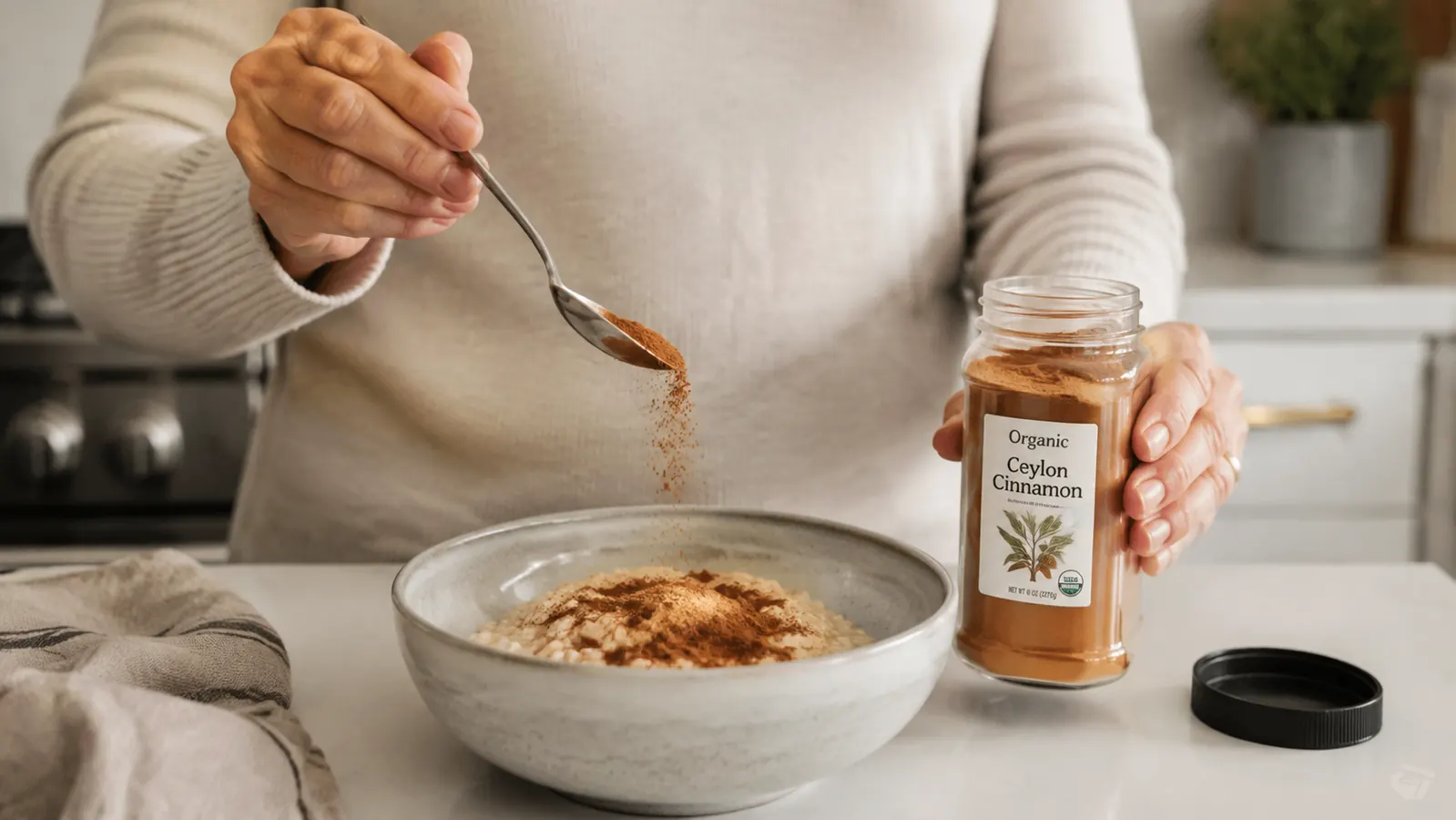
The single biggest reason I switched is the coumarin content. Both ground cinnamons carry a natural compound called coumarin, but cassia holds far more of it, and a large amount taken daily can be hard on the liver. This is not a made up fear, health authorities in several countries have set real guidance on a sensible daily amount. For someone who stirs a pinch into a pie a few times a year, it is not a concern. For someone sprinkling it onto oats every single morning, it becomes the whole conversation. I fall clearly into that second camp.
That is why, when I decided to make cinnamon a steady daily part of supporting healthy blood sugar, I moved to NutriFlair Ceylon. The mild taste is a feature for me, it disappears into oatmeal and coffee, and the lower coumarin is exactly the reassurance I wanted. I will not tell you Ceylon makes blood sugar do what no spice can. No herb replaces good food, movement, and the care plan you already follow. But if something is going to sit beside all of that every day, I would rather choose the low and gentle version than one that needs a running total kept in my head.
Coumarin deserves one plain sentence, because that word is where most of us get lost. It is a natural compound that gives cinnamon part of its scent and part of its bite, and it lives in both kinds but not in the same amount. No sensible person is telling you to stop cinnamon altogether. The point is to mind the amount over a long stretch. The low coumarin kind keeps that number small enough that a daily spoonful never turns into a conversation with your liver. For that alone, the choice settled itself before flavor even entered the room.
Where Cassia Wins
Let me be fair, because cassia is not bad cinnamon and it has a real place. It is genuinely the better choice for cooking and baking. It has the big, warm, bold flavor that recipes actually want, the taste you notice at once, and it costs a small fraction of what Ceylon costs. If your cinnamon sits in the pantry for an occasional spice cake or a batch of baked apples, then spending extra on Ceylon is paying for flavor you will not even notice there. Cassia is cheap, very good at its job, and the coumarin in an occasional baked batch is nothing to lose sleep over.
So keep cooking with it and leave it on your shelf. What I said about daily amounts is not a reason to give up baking. The only change I made was to keep a small supply of Ceylon separate for the morning habit. That is the plain and true answer, the two do different jobs, and a kitchen that holds both is completely reasonable. The mistake is pretending they are the same and grabbing whichever jar is closest all year. Once you know the difference, you do not have to choose just one.
I will not pretend the taste debate is close, because that is where cassia clearly wins, and being honest about it is what makes this comparison worth reading. If you grew up on cinnamon rolls with that warm, familiar bite, Ceylon will taste thin to you in a dessert, so keep cassia for exactly that job. Bold and inexpensive, it earns its place by the stove. Nothing in my argument against cassia daily is an argument against baking with it. A jar of cassia belongs in most kitchens, just closer to the oven than to the coffee maker.
A gentler cinnamon for a daily habit
If you plan to take cinnamon every day as part of supporting healthy blood sugar, the low coumarin Ceylon is the one to reach for. NutriFlair Ceylon cinnamon is a clean, steady way to make that a habit. Check today's price on Amazon and read the current reviews to see if it fits your morning.
Amazon Check Today's Price on Amazon →Who Should Buy Which
Buy the Ceylon, and turn to the capsule form like NutriFlair if your goal is a daily step you do not want to think about. One capsule in the morning needs no measuring spoon at the end of a long day, and its low coumarin lets you stop wondering how much is too much. If that sounds like you, then the premium is the point, the low amount is the feature you are really paying for. None of this changes your doctor's advice, it only answers which cinnamon earned the place by the coffee maker.
Let the cassia stay for the kitchen and let the guilt go. You do not have to throw away what you bake just because it carries more coumarin. A use now and then is not worth worrying over, and the cost and the bold taste win the cooking job every time. Reach for the small Ceylon supply for the daily habit and keep a cheaper jar of cassia near the pans. That is the two jar rule I settled on, and it is the honest answer that holds up in a real kitchen.
There is one more person worth naming, the busy one who will never keep a spoon by the table. If that is you, a fixed dose from NutriFlair makes the daily amount the same without weighing powder, and it stays in the drawer beside your other bottles so a rushed morning cannot make you skip. For that purpose the capsule is not a luxury, it is the whole reason the habit works. Put it that way and the choice stops being hard.
How I Tested Both Over a Year
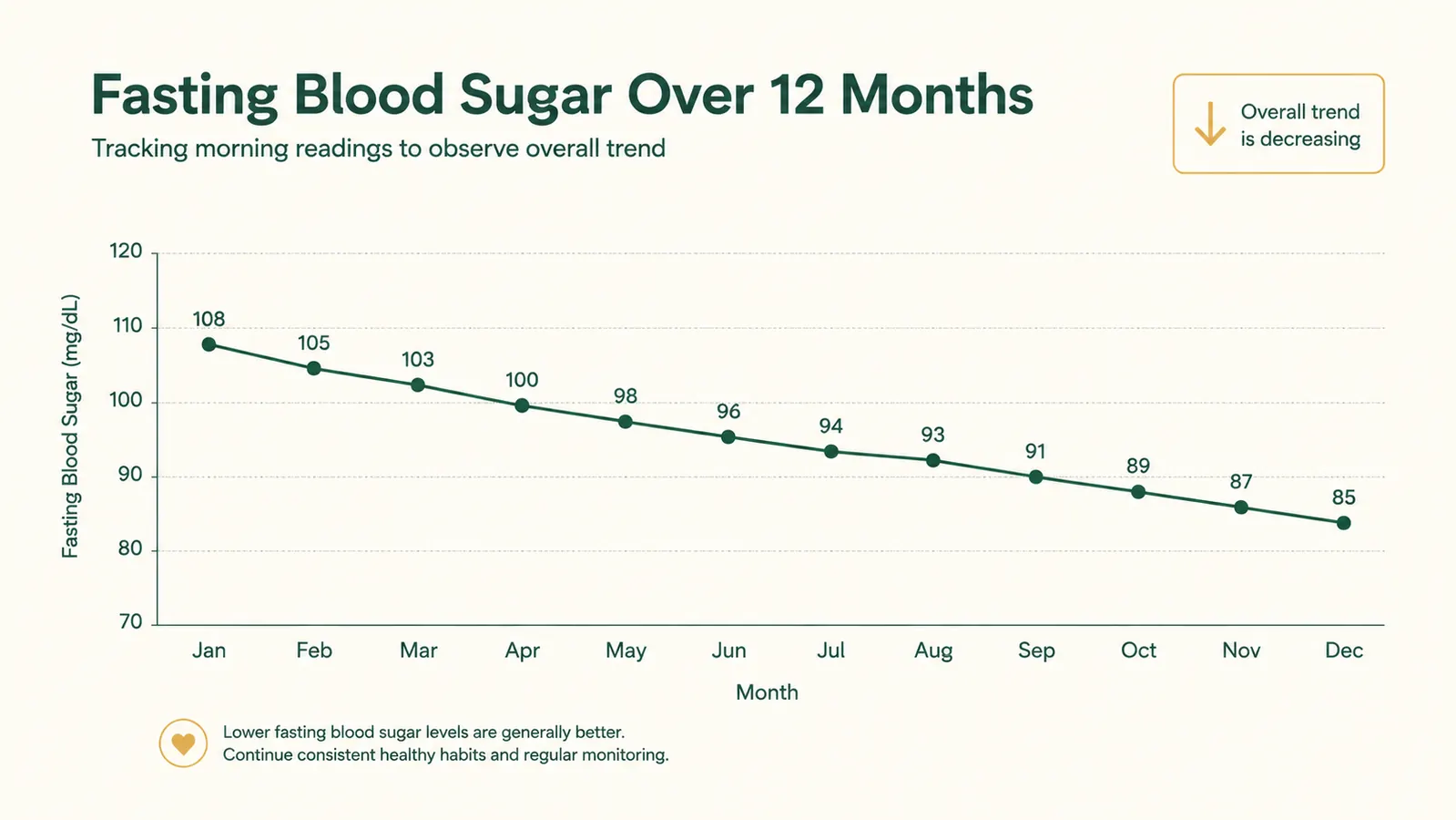
I want you to know what this rests on, so here is the method. I am a 58 year old who manages her own type 2 diabetes, full time and with hours that run long. For the first stretch I used everyday cassia the way I always had, a spoonful in coffee, a spoonful in oats, mostly trusting the grocery jar. Then I moved to a true daily Ceylon habit, a small measured amount each morning, and I changed nothing else about my food or my exercise. I kept the whole thing on a wall calendar because that is how I keep everything.
What I saw was not a sudden drop. No single food behaves that way, and I stay skeptical of anyone who promises it will. What changed was steadiness. My morning readings stopped having that familiar back and forth, where one day feels fine and the next is a surprise after the same meal. I will not dress this up as a lab result. The steady amount week after week is what made the whole system feel calmer, and a habit I do not have to fight is the one that lasts through a busy month.
The closest thing to a real number was how few mornings I missed. With the plain cassia I used to start and stop, let it go for a week, then persuade myself back. With the low and fixed capsule I missed almost none, not because I worked harder at it but because it stopped being a task and became part of the day. Over the full year, that consistency earned the Ceylon a permanent place on my shelf more than any single reading did, and it is the reason I would hand the same bottle to you.
What Nobody Told Me About This Choice
The first thing nobody told me is that the spice jar will not say which cinnamon is actually inside. Most bottles say only cinnamon, and what you are holding is almost always the cheap, common cassia. To get the true Ceylon you usually have to read the small print on the back or trust a brand that makes the type clear. The second thing found me years in, the low price of the big grocery jar made it such a thoughtless grab that I never read what I was buying. It is easy to spend years with a habit you did not even pick, and that is not a nice thing to admit.
The third thing is that a capsule form exists for precisely this reason. If you want the low coumarin Ceylon but do not want to scoop powder every morning, a clean measured dose from NutriFlair keeps every day the same and stays in the drawer with your other bottles. It is not a trick, no spice is, it simply removes the friction that lets a habit slip. For me, removing the friction turned out to be the most valuable part of the whole thing.
One more fact nobody shouts from the label is how the prices actually compare. Once you divide the cost by a single daily amount, the price of a small Ceylon jar, or of a capsule bottle, is not the enormous jump it first looks like next to a big box of cassia. The scary gap only shows up if you compare a giant container with a small premium jar over the same weeks. Per day, they sit much closer, and that means the coumarin case does not have to carry the whole argument. Learning that is what finally let me switch without feeling like a fool.
The jar that says only cinnamon is usually the higher coumarin cassia, and nobody once told me the difference until my own kitchen forced the question. Once you know it, the choice stops being about taste and becomes about how often your hand reaches for the jar.
The Bottom Line
The whole thing comes down to one question. Are you reaching for cinnamon because it finishes your cooking, or because you want a steady daily part of the support you already lean on? If you want it for cooking, reach for the bold, cheaper cassia, and it wins plainly there. If you want the everyday helper, reach for the one I trust, the low coumarin Ceylon, and a fixed capsule is how you make that genuinely easy. They are not fighting for the same shelf, and the calm daily one is what I reach for every morning.
One last polite note. Nothing here replaces the food, the movement, and the medicine your own doctor helped you decide on. What the gentle Ceylon does is sit calmly beside that plan every morning and cost you almost nothing on a busy day. The daily habit is the one that keeps. Buy the low coumarin kind if it is meant to be daily, keep the bold kind by the stove, and you have the whole answer in two jars. From the first month to the twelfth, that is exactly the truth I brought back from my own year.
A gentler start than reading every spice label
If you have come this far, you want the low coumarin Ceylon for daily use. NutriFlair made my morning calmer and my habit simpler. Check today's price on Amazon, read the reviews, and decide with both sides of the story in front of you.
Amazon Check Today's Price on Amazon →